
Explore interior trends, AI design insights, styling guides and real transformations
From Pallets to Comfortable Seating: A European DIY Guide to Pallet Sofas
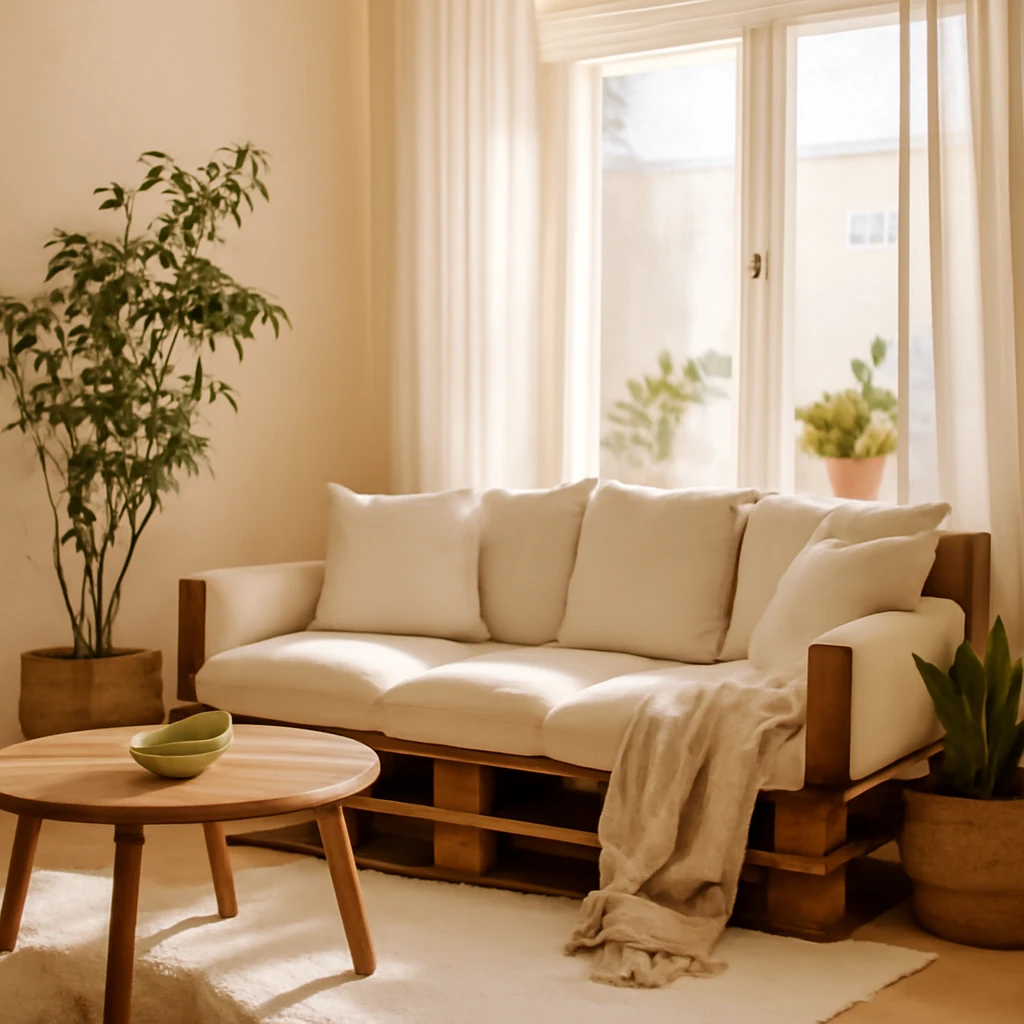
Introduction: pallet furniture in European interiors
Across Europe, homeowners are turning to sustainable, affordable options that still offer warmth, character, and long-term value. Pallet sofas have become a surprisingly stylish way to achieve comfortable seating while embracing a circular design ethos. Timber that might otherwise be discarded can be given a second life as a practical sofa frame, a cosy outdoor lounge, or a welcoming corner in a family home. This guide provides a practical, no-nonsense approach to turning wooden pallets into custom-made seating - covering sourcing, selection, construction, finishing, and a range of configurations suitable for living rooms, terraces, and compact spaces alike.
What are pallets and where to source them in Europe
Pallets are flat platforms used for transporting goods. In Europe the standard EUR pallet measures 800 × 1200 mm and typically sits around 144 mm high. They are designed to bear substantial loads, which makes them robust enough to form seating and structural elements in furniture projects. When choosing pallets for indoor furniture, prioritise those that have been heat-treated and free of chemical residues. Look for markings such as HT (heat-treated) and avoid pallets stamped MB (methyl bromide) or any pallets with chemical indicators that may pose health risks in living spaces.
Sourcing pallets in Europe is straightforward if you know where to look. Practical options include:
- Recycling yards and waste-handling facilities where pallets are routinely decommissioned or surplus to requirements.
- Local warehouses, logistics hubs, and large retailers that may pass on pallets after unloading freight.
- Small businesses and manufacturers often have pallets that are structurally sound but no longer needed for operations.
Before selecting pallets, inspect them carefully for rot, mould, and significant damage. Ensure there are no protruding nails and that the boards are intact. If a pallet has rough edges or unstable boards, set it aside or trim cautiously. For indoor projects, choose pallets that are visibly clean and dry, and preferably with HT markings clear on the surface.
Which pallets are suitable for furniture
Not every pallet is ideal for furniture. The best pallets are structurally sound, with uniform wood and minimal imperfections. When evaluating pallets for seating or framing, consider:
- The wood should be uniform in colour and free from significant mould, rot, or deep cracks.
- Boards should be intact, without loose or split sections that could compromise comfort or safety.
- Markings matter. HT indicates heat treatment and is generally safe for indoor use, MB or other chemical-treatment markings should raise concerns for living spaces. If markings are unclear, err on the side of caution and choose pallets with explicit HT confirmation from reputable sources.
Two common pallet types you'll encounter are standard four-way pallets suitable for forklift entry, and two-way varieties that are easier to lift manually. For furniture projects, two-way pallets can be simpler to manage, while four-way pallets offer more versatile layouts when assembling larger pieces.
Tools and materials
Preparation is crucial. Gather reliable tools and reliable finishes to ensure a durable result that looks refined as well as being comfortable to use.
- Sanding machine or orbital sander with an assortment of grits (start 80–120, finish 180–220).
- Handsaw or circular saw for any required cuts.
- Pry bar and hammer to remove any backing boards and to disassemble pallets if needed.
- Drill/driver with a selection of wood screws, plus long screws for structural joints and metal brackets for reinforcement.
- Measuring tools: tape measure, square, and pencil for accurate marking.
- Clamps to hold pieces during assembly and while gluing or bracketing.
- Finish options: sealant, oil, wax, or varnish suitable for indoor or sheltered outdoor use, consider UV protection for exterior pieces.
- Protection: gloves, eye protection, and a dust mask for sanding and finishing.
Straight sofa: a reliable starting point
The straight sofa is the simplest configuration and a great first project. It can be built from two or more pallets stacked to create a seat and back, with optional arms. Here is a practical method that yields a comfortable, durable piece suitable for living rooms or sheltered terraces.
- Decide on the seat height. A comfortable seat height is typically around 42–46 cm. Add or remove pallets to reach your preferred height, ensuring the stack remains stable and lockable.
- Prepare the pallets: inspect for protruding nails and remove or bend them flush. If they are dirty, wash and dry thoroughly before work begins.
- Assemble the base and seat: place two or three pallets on top of each other to form the foundation. Align edges precisely and fasten securely with wood screws. For extra rigidity, use metal angle brackets at corners or cross-bracing beneath the seat.
- Backrest design: decide whether you want a straight back or a slight incline for comfort. A single pallet or a cut piece can serve as the backrest, reinforce with timber battens if needed.
- Arms: simple arms can be created by fixing two boards at the sides of the seat. Ensure they are sturdy and adequately supported.
- Finishing touches: sand all contact surfaces thoroughly, paying particular attention to the seat, back, and arms. Apply a protective sealant, oil, or wax to enhance colour and grain. For outdoor use, apply a weatherproof coating with UV protection.
Dimensions and ergonomics
A typical straight pallet sofa uses a seat depth of 50–65 cm and a back height of 60–80 cm, depending on the number of pallets stacked and the desired visual proportion. If you want a longer sofa, extend the base by joining additional pallets side by side with compatible boards and brackets to maintain a clean, square silhouette.
Corner sofa: optimising space with an L-shape
A corner sofa makes efficient use of often-limited floor space and creates a cosy corner for conversation and relaxation. The principle is simple: two pallet stacks form the two arms of the L, then a connecting section completes the interior angle. This layout is ideal for living rooms that need to fit a sofa and a coffee area in a compact footprint.
- Plan the layout: determine the lengths of each leg of the L and whether you want a taller back for visual weight or a lower profile that feels open.
- Build the two main runs: stack pallets to create two parallel benches of equal height. Secure the adjacent edges with long screws and sturdy angle brackets.
- Join the corner: connect the two runs with a shared back panel or a framed corner piece to stabilise the junction.
- Extend the third side: add another pallet section to form a third arm or a generous chaise-like extension for lounging.
- Surface finishing: sand and seal all surfaces to ensure a cohesive look with the straight sofa. The textiles you choose will play a major role in the overall aesthetic.
Backrests and corner stability
Corner constructions demand careful bracing at the interior corner. Consider an internal brace or a dedicated corner block to prevent flexing. A continuous back panel can be reinforced with timber battens to maintain a crisp, comfortable angle for users.
Sofa bed from pallets: adaptable and space-saving
A sofa that doubles as a bed is particularly practical in compact homes and guest spaces. The concept uses a fold-down back or an additional sliding panel to convert seating into a sleeping surface. A common approach is to pair a standby mattress with a shallow bed mechanism that sits flush with the sofa when folded.
- Choose a folding mechanism or a simple hinge arrangement to create a drop-down back. Attach robust hinges and a supporting brace that becomes a footboard when deployed.
- Store two additional pallets behind or beneath the sofa to become the sleeping surface when required. Secure them with brackets so they can be drawn into position without shifting.
- Ensure the sleeping surface is flat and well-supported. Use a high-density foam mattress or adequate cushions to achieve comfort without sagging.
- Finish the frame to match the seating style, smoothing edges to prevent snags or splinters and applying the chosen finish uniformly.
Finishes, textiles and cushions
Wood is inherently appealing, and pallet furniture can celebrate its natural beauty or be dressed to suit any interior. Finishes vary depending on the intended use and climate.
Indoor spaces often benefit from water-based finishes, clear varnishes, or oil finishes that preserve the wood grain and provide a tactile surface. For sheltered outdoor use, select products with UV protection and water resistance. Always sand lightly before finishing to create a smooth surface that resists splinters.
Textiles dramatically alter the comfort and style of pallet seating. Solid-colour fabrics in charcoal, taupe, ivory, or light greys suit modern lofts, while natural fibres such as linen or cotton complement rustic or Provencal aesthetics. Cushions should be sized to the seat depth and height with removable covers for easy cleaning. For outdoor setups, choose quick-dry fillings and durable, weather-resistant fabrics. Consider using removable covers so you can refresh the look seasonally without rebuilding the frame.
Tip: The proportion between seat and cushion depth is essential. Too-thick cushions on a shallow seat can feel unstable, a balanced cushion system improves posture and comfort.
Style guidance by interior mood:
- Industrial loft: exposed timber with charcoal, black, and steel accents. Cushions in wool or corduroy in dark hues reinforce the tactile, rugged vibe.
- Scandinavian: pale timber finishes, white or light-grey upholstery, and simple geometric cushions to keep spaces bright and calm.
- Rustic or Provencal: natural linens, cottons, and burlap textures in warm, earthy tones harmonise with the timber’s warmth.
- Coastal or Mediterranean terraces: weatherproof finishes, light-coloured textiles, and UV-stable fabrics to endure sun and humidity.
Ideas for other pallet-borne furniture
Pallets aren’t limited to seating. Used imaginatively, they can form a cohesive furniture language across living spaces, terraces, and bedrooms.
Living room and terrace ensembles
Pair a pallet coffee table with matching pallet chairs or benches to create a compact, unified seating zone. A pallet console or sideboard can be built by stacking pallets and concealing hardware behind doors made from plywood panels or timber boards.
Outdoor and garden furniture
Weatherproofing is essential for garden pieces. Pallets can be converted into benches, stools, and even sun loungers with simple frames and durable finishes. They can also form garden dividers, plant stands, or raised decking elements that add warmth underfoot while remaining adaptable to seasonal changes.
Storage solutions and bedroom applications
Beyond seating, pallets lend themselves to practical storage: low chests, vertical shelving, and compact nightstands can be assembled with clean lines and hidden hardware. In bedrooms, pallets can underpin a platform bed or provide under-bed storage when raised on risers. A well-planned pallet arrangement can create a calm, uncluttered space with honest, natural materials.
Care, safety and maintenance
Although pallet furniture is hardy, it benefits from regular checks. Periodically inspect for loose nails or screws and tighten as needed. Revisit the finish every few years to maintain protection against moisture and wear. For indoor use, opt for low-VOC finishes, for exterior pieces, choose products with UV protection and water resistance. If you expect heavy rain or cold winters, consider storing exposed timber indoors during extreme weather or applying a more protective exterior coating to extend life.
Ergonomics and indoor air quality
Good design blends aesthetics with comfort and health. When planning a pallet sofa, consider ergonomic seating: a seat height that sits comfortably at approximately 44 cm, a seat depth of 50–60 cm, and a backrest angled around 100–110 degrees to support posture. Cushion thickness should align with seat depth, thicker cushions can sink in if the seat is shallow. For homes with children or pets, use finishes that are easy to clean and rehearse removing cushions for laundering.
Environmentally responsible practice
Using pallets supports a circular approach to interior design. Source from suppliers that provide responsibly produced timber and clear HT markings. Prefer pallets that have been maintained in a way that minimises contaminants. In Europe, many jurisdictions emphasise timber responsibly sourced under schemes such as PEFC or FSC, while you may not need to cite certifications in every case, seeking products that align with sustainable woodland management is a wise, future-facing choice.
Quick-start guide to building a pallet sofa
- Source four or more safe pallets with clear HT markings and in good condition (EUR: 800 × 1200 mm, height around 144 mm).
- Inspect for mould, rot, and structural integrity, remove damaged boards and nails.
- Decide on configuration: straight, corner, or bed. Gather fasteners and reinforcing brackets accordingly.
- Disassemble if necessary and prepare the boards, otherwise, sand all surfaces to remove splinters and rough patches.
- Assemble the base and seat using screws and brackets, ensure the frame is square and stable. Add cross-bracing where appropriate.
- Attach backrests and arms, ensuring comfortable angles and solid support.
- Finish the timber with a sealant, oil, or wax suited to indoor or sheltered outdoor use, allow to cure fully.
- Fit cushions with removable covers to facilitate cleaning. Choose textiles that resist fading if used outdoors or in sun-lit rooms.
- Test the final piece for stability and comfort, adjust if necessary and enjoy.
Note: For indoor furniture, ensure pallets are heat-treated (HT) and free from contaminants. Avoid MB-treated pallets to reduce health risks.
Whether you are renovating a compact city apartment, refreshing a balcony, or furnishing a countryside dwelling, pallet sofas offer a sustainable, customisable route to comfortable seating with a tangible story. With careful sourcing, thoughtful finishing, and appropriate textiles, pallet seating can become a distinctive centrepiece in European homes.
You may also like these articles
 Small Spaces
From Narrow to Noteworthy: European Hallways
Practical ideas to turn ultra-narrow European corridors into functional, bright spaces.
Tips & How-To
Minimalist Interiors: A Practical Guide to Calm, Functional European Homes
A practical guide to calm, functional minimalist homes across Europe.
Kitchen Design
From Timber to Glass: A European Guide to Kitchen Fronts and Finishes
A comprehensive guide to modern kitchen fronts, materials and practical design advice.