
Explore interior trends, AI design insights, styling guides and real transformations
Beyond Curtains: 10 Elegant Window Decor Ideas for European Homes
Intro
Across European homes, the era of heavy curtains is giving way to lighter, more sculptural window styling. With daylight as a central design element, modern interiors frequently feature curtain-free windows that still offer privacy, warmth and character. The following ideas present a spectrum of materials and techniques that respect energy efficiency, acoustics and long-term maintenance while turning windows into design features in their own right. From frosted glass to handmade decor, these options suit city apartments, townhouses and period houses alike.
1. Frosted glass
When curtains are removed, daylight travels more directly, which can be both a blessing and a challenge. Frosted or matte glass diffuses sun glare while preserving privacy. Options range from factory-installed frosted panes to sandblasted patterns or partial frosting on a single pane. Frosted glass works well in bedrooms, bathrooms and living spaces overlooking shared courtyards, and it pairs with soft fabrics and timber for warmth. For renters or light-touch renovations, frosted films offer a reversible solution that can be applied to the interior face of the glass. If privacy needs vary, consider a design that leaves a clear band at eye level to enjoy the view while keeping the upper portion softly obscured.
2. Decorative window films
Decorative films come in a wide range of patterns, from botanical motifs to geometric lattice and even glow-in-the-dark designs. Self-adhesive or static-cling variants allow quick changes, ideal for seasonal updates or rental dwellings. Choose translucent films to preserve daylight while deflecting UV rays, or opt for opaque patterns for enhanced privacy. Films can be layered with frosted panels for complexity and can be trimmed to fit unusual shapes, including angled bay windows or skylights. When selecting films, verify compatibility with glass types and any existing glazing you have in place.
3. Stained glass accents
Stained glass is not solely historic, modern interpretations integrate coloured glass panels or fragments into contemporary schemes. You can install small stained glass panels on selected sections of a window, or use fused glass techniques to create a permanent, light-catching feature. In living spaces, stained glass fragments can animate daylight, turning it into a living colour palette. In kitchens or bathrooms with moisture exposure, sealed glass pieces or ceramic frits offer durability. Work with a professional glazier or glass artist to choose mood-enhancing colours and maintain easy cleaning access.
4. Decorative screens
Decorative screens provide a sculptural screen between space and light without the heaviness of drapes. Wooden screens, laser-cut metal panels or perforated acrylics can be mounted inside or outside the window, offering privacy and light diffusion while still allowing views. Folding or sliding screens offer flexibility, you can open or close them as needed. For European homes with compact layouts, screens can dematerialise a window as a focal point or double as a room divider when placed across a broad opening. They are low maintenance, typically requiring gentle dusting and occasional oiling of wooden slats.
5. Roller shades
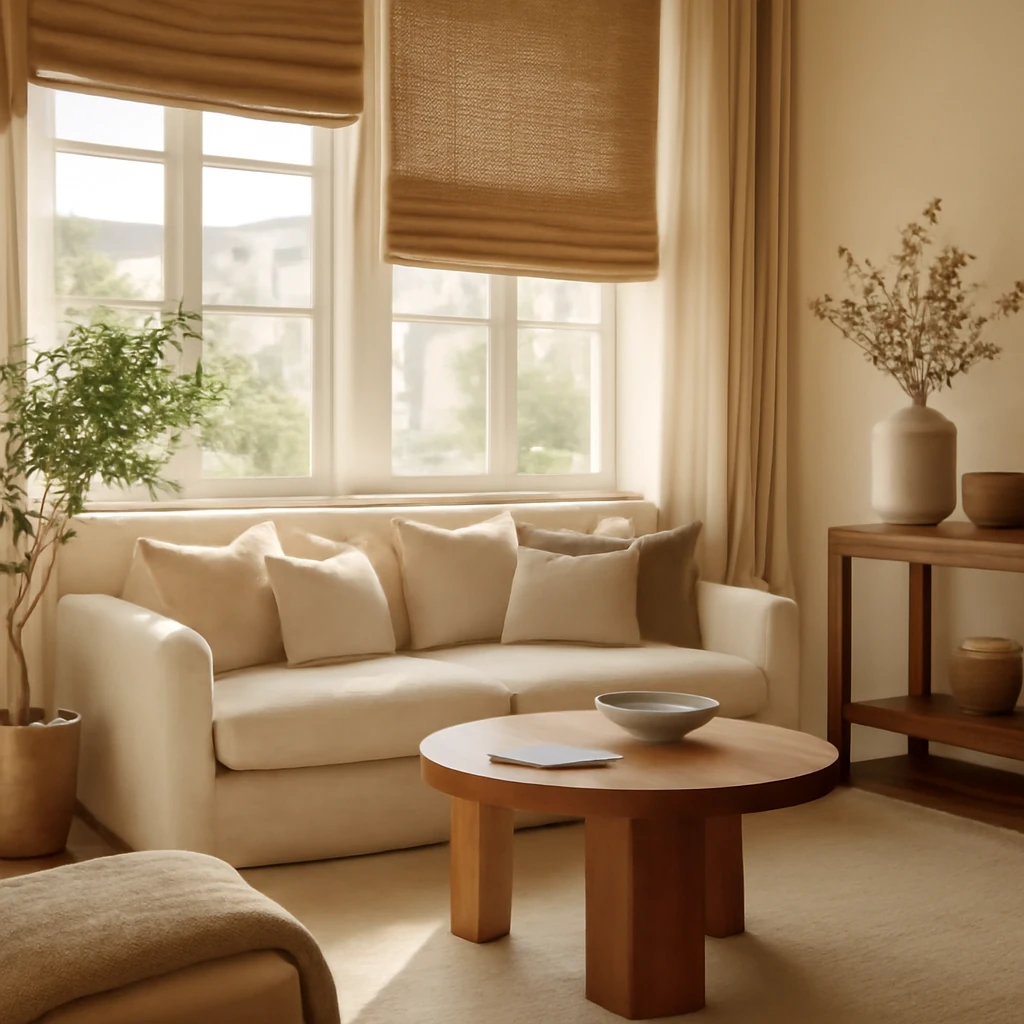
Roller shades present a refined alternative to curtains: fabrics or woven textures that roll up neatly at the top of the window. They come in a range of opacities, from sheer to blackout, and can feature subtle prints or textures that act as a design statement. When raised, they reveal the full window, when lowered, they provide privacy and light control. In high-traffic rooms, select fabrics that resist snagging and are easy to wipe. For added security in ground-floor homes, look for heavy-duty profiles and child-safe operation mechanisms.
6. Bead curtains
Bead curtains bring movement and sparkle to a window without traditional drapery. Glass, crystal, acrylic, or shell beads reflect light and convey a sense of playfulness. Use in moderation to avoid visual overload, align bead strands with the room’s architectural lines and colour palette. For kitchens or bathrooms, choose moisture-resistant materials. A contemporary approach pairs bead curtains with neutral textiles and a simple window trim to keep the overall look cohesive.
7. Live plants
A line of planters on the sill can soften a window and improve indoor air quality, while maintaining daylight and sightlines. Choose plants that suit the light level of the space - evergreen favourites for bright windows, or shade-tolerant varieties for north-facing rooms. Group three to five tall plants at equal spacing for a sense of order, or create a green vertical feature with wall-mounted planters. During warmer months, you can extend greenery beyond the window by placing planters on external ledges or balconies, creating a seamless transition between indoors and outdoors.
8. Window gallery
For art lovers, a window gallery creates a living perimeter around a large window. Instead of heavy drapery, attach lightweight frames, canvases or textile panels along the perimetral edge. This approach works best on expansive, tall windows where natural light subtly changes the appearance of art throughout the day. Ensure the weight of items is balanced and that frames are easy to remove for cleaning. A window gallery can become a discreet focal point, reflecting the room colour palette and seasonal themes.
9. Decorative reveals
Even a modest window can benefit from a refined surround. Decorative reveals around the window can be created with tile, decorative stone or plaster to form a frame that enhances the window as a feature. Using moisture-resistant materials in bathrooms or kitchens is essential, while in living areas you can opt for warm woods or ceramic surrounds. This detailing not only elevates aesthetics but also protects the plasterwork and helps control condensation by guiding moisture away from the frame.
10. Handmade and DIY decor
Handmade touches offer personality and a sense of craft. Consider lightweight garlands, suspended ornaments or small terrariums that hang from the window frame or sit on the sill. DIY projects using recycled materials - glass beads, driftwood or fabric scraps - can create a unique look that aligns with sustainable design goals. When choosing DIY options, ensure their weight and fixation are appropriate for the window structure and that any electrical items, such as fairy lights, comply with safety standards. Handmade decor thrives in pared-back schemes, providing warmth without blocking daylight.
Closing thoughts
By combining these approaches, European homes can enjoy bright interiors with privacy and character. Start with one or two features and observe light levels throughout the day, then adjust to balance openness with seclusion. Maintain a cohesive colour palette and ensure finishes are suitable for humidity and use. With thoughtful planning, windows become a strong design asset rather than a constraint.
You may also like these articles
 Lighting
Bedroom Lighting: A Step-by-Step Guide for European Homes
A practical guide to layered bedroom lighting across Europe.
Tips & How-To
Mirror Frame DIY: A Beginner's Guide for European Homes
Two reliable methods to craft a custom mirror frame for European homes.
Interior Design
Wall mouldings in interiors: stylish ideas, pairings and zonal uses
Elegant wall mouldings transform spaces with subtle, timeless charm.