
Explore interior trends, AI design insights, styling guides and real transformations
Memphis Design Reboot: Bold Geometry for European Interiors
Introduction
Memphis design is back in contemporary European interiors, bringing a rebellious glow to rooms that might otherwise lean towards minimalism. Born in the early 1980s when Italian architect and designer Ettore Sottsass led the charge, Memphis was a counterpoint to the sterilised rationalism of the era’s popular movements, notably the Bauhaus-inspired orthodoxy. It drew energy from pop art, kitsch, and art deco, turning those references into a new language of colour, form and texture. The idea was not to reject good taste but to challenge it, to inject whimsy and theatre into everyday life. In European capitals from Milan to Paris, Berlin to Barcelona, designers and homeowners have kept Memphis’s spirit alive, translating its rules into spaces that feel fresh, expressive and thoroughly European.
Today’s Memphis-inspired environments are less about shouting novelty and more about curated drama. They lean into architecture-friendly geometry, controlled asymmetry, thoughtful material pairing, and a restrained palette punctuated by saturated accents. The result is a space that reads as sculpture you can live in: visually exciting, tactically precise, and somehow comfortable enough to inhabit every day.
Memphis is not a costume, it is a way of thinking about space: it asks you to see the furniture as form, the surface as narrative, and the room as a stage for living.
This article explores how the Memphis ethos translates to European homes today, with practical advice on proportion, colour, and materiality. It offers a guide to creating rooms that feel both fearless and refined, able to adapt to varying scales, light levels, and building regulations across the continent.
Geometric forms
Active geometry is a defining trait of Memphis. But the look is not simply a jumble of polygons. It is a deliberate choreography: sculptural furniture with sculptural silhouettes, curved edges that soften hard lines, and sharp angles that punctuate softer surfaces. This is a language of contrast, where rounded forms can sit beside rectilinear shapes, yet the overall composition remains legible and cohesive.
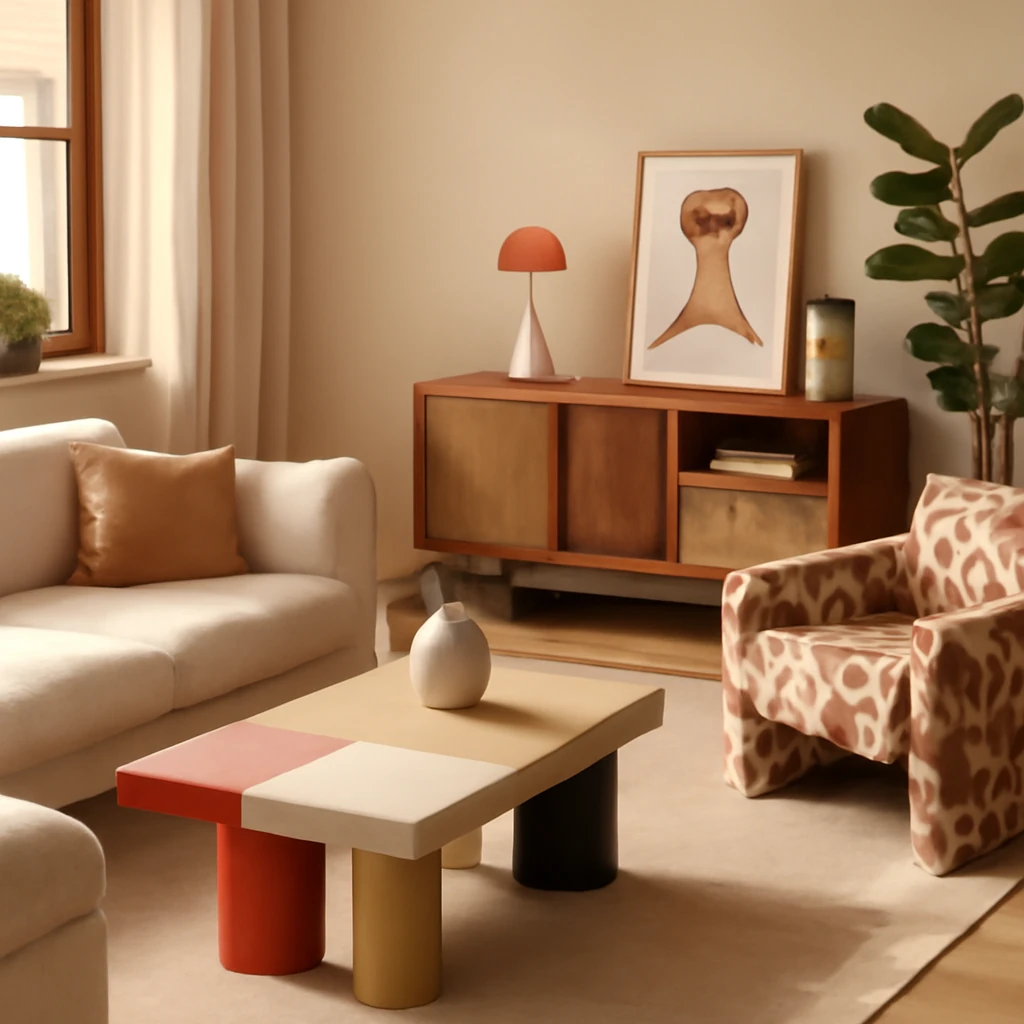
In practice, a Memphis-inspired room might feature a bold, asymmetrical seating arrangement opposite a graphic coffee table, a console with irregular geometry paired with a softly curved sofa, or a wall of shelving that alternates straight and curved modules. The trick is to preserve order within the play of shapes: every piece has a defined place, and nothing reads as accidental.
Scale matters. In European homes with standard ceiling heights and room proportions, it is wise to balance monumental shapes with lighter, smaller pieces so the space does not feel overwhelmed. The geometry should feel integrated, not as if the room were rearranged by a child’s toy set, but as a deliberate architectural statement.
Mixing patterns and colours
The colour story in Memphis is intentionally vibrant. Think lemon yellow, bold reds, azure blues, emerald greens and hot pinks - often used in blocks or surprising pairings that read as a visual punch. The principle is colour blocking: large swaths of pure colour juxtaposed with black accents, graphic prints, and patterns that reinforce a sense of rhythm rather than chaos.
Walls and ceilings are commonly kept in light, neutral tones - soft whites, warm greys, or pale beige - to act as a calm backdrop. The saturated colours then appear through furniture, textiles, and decorative elements, which become the room’s focal points. In a European context, this approach works exceptionally well with natural daylight and refined architectural details. The key is restraint: limit the use of competing patterns to two or three motifs per room, and repeat a motif at least twice to create coherence.
Textures also play a crucial role. A glossy lacquered cabinet next to a matte stone top, a velvet upholstery against a smooth leather chair, or a fabric with a graphic print set against a plain wall all contribute to the visual language of rhythm and contrast that defines Memphis.
Play of materials and forms
Memphis thrives on theatre - on experiments with proportions, on oversized forms, and on a mix of textures and finishes that feels both grand and approachable. The palette is complemented by a bold materials mix: leather and suede, glass and ceramic, wood and metal, sometimes alongside unexpected inclusions such as marbled surfaces or brightly coloured plastics.
There is no rule that materials must stay in their expected spheres. It is perfectly acceptable to combine luxurious marble with affordable plastic, or to pair a modular, toy-like seating system with a high-end, sculptural lighting fixture. The result should feel purposeful: a space that recognises luxury and playfulness in equal measure, with surfaces that invite touch and curiosity rather than uniformity.
In European interiors, consider how existing architectural details can be leveraged. A room with tall, light-filled windows can counterbalance heavy, glossy surfaces, a brick or plaster wall can provide a natural backdrop for a glossy, geometric cabinet. The aim is a layered complexity that remains legible from across the room.
Эфектный декор / Dramatic decor
Decoration in Memphis is an occasion, not an afterthought. The style embraces pieces that function as sculpture: avant-garde figurines, sculptural lighting with bold shapes, and vases with unusual forms. Decorative objects often carry strong silhouettes or intricate patterns that become focal points in a room.
Totemic sculptures are a recurring source of inspiration, providing a bridge between form and colour. These pieces harmonise with saturated hues and graphic surfaces, allowing you to build a composition that feels like a curated gallery rather than a conventional living space. Wall art - abstract prints, pop-art inspired pieces, collages, and film stills - can reinforce the room’s narrative without overwhelming it. The key is balance: one or two striking pieces per zone, paired with calmer backdrops and understated architectural details.
Light plays a central role in these rooms. Sculptural lamps and atypical light fittings act as both illumination and sculpture, casting dramatic shadows and emphasising material contrasts. In European homes with moderate daylight, thoughtful lighting can transform a steady palette into a dynamic environment after dusk.
Memphis in your interior
If you are drawn to Memphis but concerned about it feeling too aggressive, start with a calm base and let the distinct elements enter gradually. Use restrained background colours and quiet textures as a stage on which bolder pieces can perform. A single statement item, such as a geometrically shaped sofa, a graphic coffee table, or an eclectic cabinet, can establish the Memphis language without overwhelming the space.
Consider how a room’s natural light, ceiling height, and floor finish influence the design. In well-lit European interiors, pale walls and light floors help the saturated furniture read clearly. In darker spaces, choose strong accents and reflective surfaces to bounce light and keep the room feeling lively rather than heavy. The Memphis approach is not about maximalism for its own sake, it is about crafting a space that feels energetic, joyful and intelligently designed.
The modern European home - often a blend of historic architecture and contemporary living - offers ideal conditions for Memphis. High ceilings, tall windows, and timeless materials such as stone, brick, and timber provide a sophisticated foil for the movement’s theatrical geometry. When executed with care, Memphis can feel both culturally aware and personally expressive, a design language that honours craft while embracing whimsical delight.
How to design a Memphis-inspired space in Europe
To translate Memphis into a contemporary European home, follow a structured process that respects scale, light, and material finish. The steps below offer a practical framework for designers and homeowners alike.
- Define a neutral base Start with a calm architectural background. White, soft stone, or warm grey walls and a natural wood or stone floor create a stabilising stage for the bolder Memphis elements to appear without competing with the room’s architectural identity.
- Select a focal piece Choose one statement item with Memphis geometry. This could be a sofa, a coffee table, or a storage cabinet whose shapes dictate the room’s rhythm. Ensure the piece has a high quality finish and proportionate scale for the space.
- Apply colour with intention Introduce saturated hues through textiles, upholstery, and small-scale decor. Repeat a motif across textiles or art to create visual continuity, avoiding a crowded collage of patterns.
- Layer textures and finishes Pair matte surfaces with gloss, combine natural materials with synthetic ones, and vary tactile qualities. This layering adds depth and warmth to an otherwise bold palette.
- Use prints and patterns sparingly Keep two or three motifs in play and repeat them to build a cohesive narrative. Bright, graphic prints work well on cushions, rugs or a single feature panel rather than across multiple walls.
- Curate lighting as sculpture Seek lighting that is both functional and sculptural. A statement floor lamp, a pendant with a graphic silhouette, or a wall-mounted fixture that casts dramatic shadows can harmonise with the room’s geometry.
- Balance scale and proportion In compact flats or compact rooms, opt for a few large, well-proportioned pieces rather than many small, competing objects. In larger spaces, a careful distribution of sculpture, seating and display allows the eye to travel without fatigue.
- Consider storage and practicality Memphis elements should be usable daily. Integrate concealed storage within geometric cabinets or create rooms within rooms that separate display zones from living zones. This builds order while preserving the style’s expressive edge.
- Texture and accessory strategy Use a mix of fabrics with different sheens and weave structures. Accessories should feel intentional, with some objects appearing almost like research samples ripped from a design studio, while others resemble playful collectibles.
- Respect the environment In Europe, sustainability matters. Choose durable materials, responsibly produced textiles, and finishes with low volatile organic compounds. Reclaimed woods, responsibly sourced stone, and finishes designed for longevity align Memphis with European design ethics.
Materials, finishes and European sustainability
European interiors increasingly prioritise air quality, comfort, and responsible sourcing. Memphis-inspired spaces can be aligned with these values without compromising their exuberant character. The key is to balance longevity with the playful spirit of the movement.
Opt for durable surfaces that endure daily living: ceramic or vitrified tiles with graphic patterns, robust rubber or composite flooring, and lacquered or veneered furniture with reinforced hardware. When choosing textiles, look for fabrics with solid performance ratings for wear, stain resistance and colour fastness. For walls, premium paints with low emissions and good scrubbability are advisable, especially in kitchens and family zones.
In terms of furniture sourcing, European design studios often favour modular systems that can be reconfigured or updated over time. This aligns with the Memphis ethos of flexibility and playfulness while supporting a longer product lifecycle. When mixing new pieces with inherited items or contemporary classics, the Memphis principle remains the same: celebrate contrast, maintain order, and let proportion guide the composition.
Small spaces and terraces
Memphis works well in compact urban dwellings and on terraces where the outside light interacts with a bold interior. In small rooms, a single, bold Memphis element can act as a focal anchor, while neutral walls prevent the space from feeling crowded. A compact lounge can be anchored by a geometric chair or a sculptural side table, with cushions and throws in two or three coordinated colours to weave the look together.
On terraces, materials that tolerate outdoor conditions, such as powder-coated metal, weather-resistant ceramic, and treated timber, can carry Memphis patterns and colours. Outdoor cushions in saturated hues, paired with graphic planters and sculptural lanterns, extend the interior’s visual language beyond the glass boundary. If space permits, a small freestanding sculpture or a bold outdoor lighting piece can echo the interior’s geometry and unify the indoor-outdoor experience.
Trends and enduring appeal
Memphis is not a fleeting fashion - its core ideas endure because they offer a framework for personal storytelling in the home. In Europe, the movement resonates with cities where modernist heritage, historic architecture and progressive design converge. It allows for experimentation within an architectural context that is already rich with texture and history. The enduring appeal lies in a design approach that values wit, craft, and a willingness to challenge conventions while maintaining liveability and real-world comfort.
As contemporary spaces evolve, Memphis continues to adapt. Its emphasis on geometry, surface rhythm, and a deliberately eclectic material language dovetails with current interests in tactile finishes, sustainable production, and digital fabrication. The result is a timelessly modern aesthetic that can be refined to suit individual lifestyles - from gallery-like living rooms to family-friendly kitchens and serene bedrooms - without surrendering the sense of joy that defines the Memphis attitude.
Conclusion
Memphis design remains a vibrant force in European interiors: a method of embracing colour, form, and texture as everyday experiences rather than mere decoration. By combining geometric bravura with thoughtful restraint, it is possible to craft spaces that feel original, inviting, and resilient - rooms that celebrate life, art, and a touch of play. The modern European home is ready for Memphis energy: a design language that makes rooms feel alive, curated, and wonderfully human.
You may also like these articles
 Living room
Recliner design for European interiors: comfort, technology and timeless style
European recliners blend comfort, design and smart features for modern living.
Small Spaces
Balcony blooms across Europe: 14 plants that flower all summer
Turn compact balconies into colour-filled terraces with our summer-flowering plant guide.
Tips & How-To
How to Create a Full Design Project Yourself: A Practical Guide for European Homes
From first measurements to final drawings: a complete DIY design roadmap.