
Explore interior trends, AI design insights, styling guides and real transformations
New Year Window Decor 2026: 34 Inspiring Ideas for European Homes
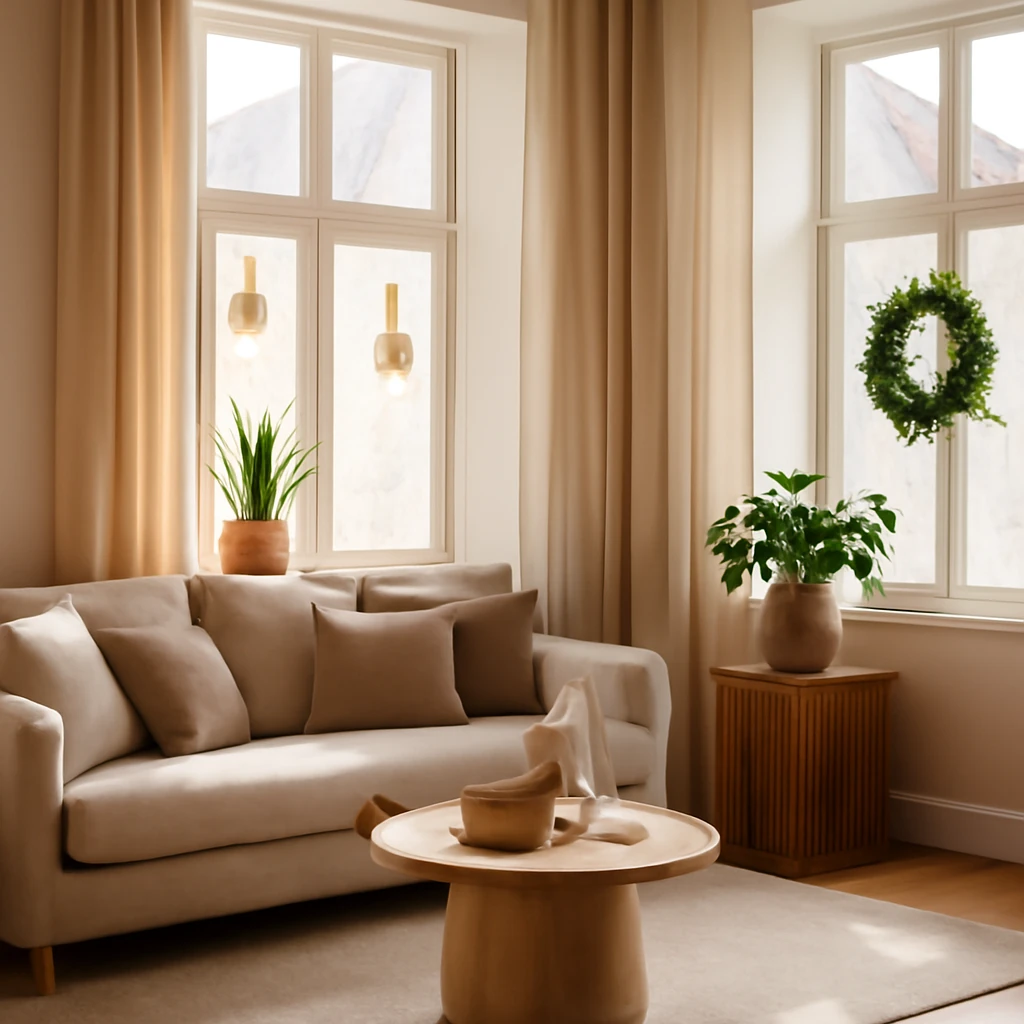
Creating a festive window look for 2026
Windows are a natural focal point in festive European homes. Decorating them offers a simple, elegant way to usher in the New Year without overhauling the entire interior. In many European towns and cities, homes feature a mix of sash, tilt-and-turn, and casement windows, which respond beautifully to warm light and seasonal silhouettes. The ideas below are adaptable for rental flats, laneside houses and modern apartments alike, providing a cohesive outlook that can be scaled to window size and architectural style.
Themes for 2026: Classic, Year of the Horse, and Current Styles
Classic
Timeless festive decor remains popular year after year. The window can host symbols of winter and celebration: snowmen, Father Christmas, a snowy village, snowflakes, bells, stars and more. You can opt for a single motif or build a small scene: houses along a village road, stars in the sky and a moon above. A predominantly white palette keeps the look serene, if colour is introduced, limit it to 2–3 tones to preserve harmony. For those who don’t have space for a real tree, evergreen sprigs on the window can stand in as a substitute, creating a refined festive mood.
Another classic approach is a garland of lights, evergreen sprigs, and a large bow. This style works particularly well in rooms where the tree is absent or small. When decorating a window, maintain a unified colour scheme - choose 2–3 complementary shades (for example white and blue, or green, red and gold) and carry them across all elements.
Year of the Horse
If you’ve grown fond of traditional décor, you can pivot to motifs connected to the symbol of the coming year - the Horse. For the year 2026, decorations in rich red tones are especially auspicious. From scarlet to deep burgundy, pair the red with evergreen foliage, warm yellow or gold lighting and touches of orange, yellow and brick tones in ornaments. Dried grasses and natural elements also suit this theme, such as a vase of dried wheat or barley on the sill or a garland made from dried plant material.
Green, the colour of grass and fresh growth, complements the fiery energy of the Horse well. Avoid cool water-toned shades like blue or teal, which can feel discordant with the fire element. Warm lighting is preferred - opt for lamps and garlands with soft yellow light rather than stark white. To invite good fortune, consider small horse-themed decals or frosted footprints of horses’ hooves on the glass. If you’re unsure about freehand drawing, ready-made window decals featuring a horse in motion can be a tasteful alternative.
If a bold motif feels out of place in your interior, you can interpret the theme more subtly: gold snowflakes, a gold-tone horse silhouette on a frosted pane, or a wreath designed to resemble a stained-glass panel. The key is to keep the design refined and avoid overt kitsch so that it remains an elegant gesture rather than a decorative novelty.
Current Styles
Contemporary European interiors gravitate toward three main directions for festive window styling: minimalism, eco, and neovintage. Each has its own rules and it’s possible to blend elements from two directions while maintaining a cohesive look.
- Minimalism: ideal for spaces with restrained palettes and a curated set of decorations. A single, well-chosen feature - such as a slim LED strip between reveals, a discreet artificial evergreen on the sill, or a simple geometric star - can define the look without clutter.
- Eco: natural materials and handmade textures take centre stage. Think garlands and hangings made from acorns, pinecones, seed pods, and dried grasses. A simple wreath and a handful of evergreen sprigs can be enough when paired with a quiet lighting scheme.
- Neovintage: reinterpret mid‑century ideas with modern functionality. Vintage baubles, glass ornaments and nostalgic motifs can be integrated with current furnishings if the colour palette remains cohesive and restrained.
For a minimalist approach, a single understated garland or a compact evergreen sprig on the sill may suffice. An eco approach favours natural materials and handmade garlands, while neovintage invites playful mixing of old and new. The overarching rule is restraint: limit the number of motifs and ensure they relate to the room’s existing palette and materials.
How to decorate: practical ideas for 2026
Decorating windows for the New Year can be straightforward or creatively ambitious. The simplest option is to apply paper snowflakes directly to the glass or to cut out motifs from white paper and arrange them across the pane.
For a more polished look, consider ready-made, reusable window decals. If you want a touch of colour or texture, opt for translucent vinyl decals that glow softly in daylight and emit a gentle radiance after dark without overpowering the view. You can also draw winter scenes on the glass by hand or with stencils. Which materials to use?
- Gouache: affordable and widely available, opaque enough to be visible on glass.
- Chalk markers: ideal for crisp lines on smooth glass, if unavailable, a white acrylic marker is a viable substitute.
- Toothpaste: plain white or pale-blue toothpaste mixed with a little water can act as a temporary paint substitute for outlines.
- Dry snow spray: creates a light, snowy texture through a stencil, giving a festive effect.
- Soap-based paste: a gentle adhesive that dries clear and cleans off easily after the season.
There are several ways to apply paint or its substitute. In addition to brushes, you can use a toothbrush to spray for dotted patterns, a kitchen sponge for soft textures or even your fingers for a more organic finish. Don’t limit yourself to the glass: decorate the sill and the curtains as well. Lightweight decorations can hang from the curtain rail, while a small winter village can be arranged on the sill with LED candles (battery-operated for safety). Place evergreen sprigs and dustings of faux snow to reinforce the seasonal mood.
A final flourish can be a decorative curtain or window scarf with twinkling lights - these can dramatically amplify the festive atmosphere when the room grows dark in the evening.
Where to fix the decorations: securing methods
With the concept in mind, the next step is to fix the decor so it stays in place but can be removed without damage. If you are painting directly on the glass, water-based paints, artificial snow, toothpaste and markers wash off with water and a damp cloth. Ready-made decals and stained-glass vinyls should peel away cleanly after the festivities. Garlands, wreaths and ribbons attached to curtain rails are easy to remove too.
For paper snowflakes or delicate paper patterns that require adhesive, consider the following methods. Each has its own pros and cons depending on the window type and location (for example, ground-floor flats with direct outside views require careful choices to avoid obvious fixings):
- Double-sided tape: quick and reliable for light shapes and small items, may be visible from inside on lower floors or where the glass is highly reflective.
- Standard tape: holds heavier pieces well but can be noticeable if not masked neatly.
- Painter’s tape: leaves minimal residue and is easy to remove, practical for securing edges of complex shapes.
- PVA glue or craft glue: effective for paper elements, glue sticks are convenient but can be difficult to wash off if over-applied.
- Hot glue: provides strong fixation but use with caution on glass and around heat sources, ensure it does not risk cracking the pane.
- Soap-based paste: acts as a semi-permanent, easily removable adhesive for paper pieces.
- Push pins or pins for delicate fabrics: useful for lightweight textiles or ribbons when the window allows.
When decorations are placed on the area around the window rather than on the glass itself, avoid high-adhesion methods that could damage finishes. A reusable adhesive putty is a practical option for securing lightweight items without leaving residue. For heavier pieces such as a wreath or a winter-curtain, anchoring to the window frame or cornice is advisable.
Safety, maintenance and removal
Festive window decorations should be aesthetically pleasing and safe. If using electrical lights, choose certified, energy-efficient options with cool-to-the-touch bulbs. Position lights away from textiles and ensure that evergreen decorations are kept away from heat sources. Battery-operated LEDs offer a safer alternative for close contact with fabrics and drapes.
When it comes to removal, begin at the outer edges and work inward. Soften dried glues with warm water and peel away gently. Any marks can usually be removed with a mild glass cleaner, being careful not to scratch the surface. Avoid abrasive tools that might damage the glaze or paint. If fabric-based decorations have been used, remove pins or hooks with care and wipe the area clean.
Post-season storage and longevity
With proper care, festive window decorations can be reused for successive winters. Store delicate items in breathable containers away from direct sunlight and excessive humidity, and label storage boxes so that you know where everything belongs next year. Consider keeping a compact kit with spare decals, lightweight hooks and a few safe adhesives for quick refresh in late December.
Design considerations for European homes
Europe’s architectural variety requires window decoration to adapt to the space. Whether you live in a period house with tall sash windows, a modern flat with expansive glazing or a compact apartment with limited daylight, these guidelines help:
- Lighting: winter daylight is often limited, opt for warm white lighting (roughly 2700–3000K) to create cosiness. Avoid cool or bluish tones that clash with the season’s mood.
- Privacy: in dense urban settings, choose translucent decals or frosted patterns to preserve views while letting light through.
- Glazing and frames: older frames may require gentler solutions, test on a small area first to ensure no damage occurs.
- Window types: tilt-and-turn and sash windows have different anchoring points than casement windows. Plan fixings accordingly and avoid obstructing opening mechanisms.
- Rental considerations: many European cities have restrictions on permanent fixtures, opt for removable decals and non-invasive attachments.
Inspiration: 34 ideas you can try in 2026
From timeless classics to contemporary interpretations, these ideas can be implemented quickly or developed into more elaborate schemes over a weekend. The list is organised by theme to help you plan for different spaces in a European home.
- Classic snowflake garlands along the top of the window frame, with soft warm lights for a gentle glow.
- A white-on-white winter landscape across the glass using opaque gouache for crisp lines.
- A red-and-gold horse silhouette on a frosted pane to mark the Year of the Horse in a refined way.
- A minimal evergreen sprig on the sill with a slim LED strip between the reveals.
- A delicate wreath hung from the window latch, accentuated with warm lights.
- Paper cutouts arranged in a snow globe motif, easily removed at year-end.
- Translucent decals with metallic accents for a subtle shimmer.
- Stained-glass look decals in jewel tones for a contemporary twist.
- A village vignette painted with white gouache, with a tiny moon and stars dotted across panes.
- A simple star garland across the top of the glass to echo the season.
- A creeping ivy of white glitter along the bottom edge to mimic frost.
- Natural garlands of pine and eucalyptus on the sill for a crisp aroma.
- A crystal-strewn snowflake curtain that falls across the window when drawn.
- A miniature winter forest scene created with wooden cutouts on the windowsill.
- Baubles hung from the curtain rail using transparent threads for a light, floating effect.
- Recycled paper stars arranged as a mobile across a large window.
- A warm glow from LED candles in frosted holders on the sill.
- Golden stars scattered across the glass using translucent decals.
- A soft chalk-drawn village with tiny street lamps lit by warm-toned markers.
- Silver-tinted frost patterns created with a fine brush and glitter accents.
- Winter meadow scenes using muted greens and browns on the glass for a nature-forward mood.
- Beads or glass beads strung along a thin thread to create a shimmering border.
- A Nordic-inspired star motif repeated across the pane for symmetry.
- A single bold motif in a deep colour palette (red or emerald) against a pale background.
- Abstract frost patterns achieved with frost spray and stencils.
- Natural seed pods in a garland draped across the frame.
- Soft white ribbons tied into a bow at the window latch.
- Winter village diorama along the sill using small ceramic houses.
- Decorative snowdrift illusions painted with light shading for depth.
- Hanging lanterns with warm fairy lights along the curtain rail.
- Handmade snowmen or Father Christmas figures placed on the sill.
- Integration of a neutral textile edge or tassels to finish the top line neatly.
- A hand-drawn night sky with a pale moon and stars across the panes.
- A wreath of evergreen branches hung on the inner side of the window, visible from inside the room.
- A minimal single evergreen stem perched on the sill with a small light, echoing nature.
- DIY snowflake spray on the glass, finished with a light dusting of glitter for sparkle.
- A small potted evergreen on the sill to bring fragrance indoors.
Use these ideas as a starting point, adapt proportions to your window size and room, and ensure the outside view remains pleasant even when decorations are in place. A cohesive 2–3 motif approach yields the most timeless look.
Closing thoughts
Decorating windows for the New Year offers a flexible, low-effort way to introduce a festive mood while preserving a calm, elegant interior. With careful planning, you can achieve a cohesive look that aligns with your style and preferences. The strongest results come from restraint and coherence: select 2–3 motifs and reuse them across windows and related surfaces to unify the space and celebrate the season with subtle sophistication.
You may also like these articles
 Bathroom Design
Painting Bathroom Walls: Debunking 6 Myths for European Wet Rooms
Debunking myths about painting bathroom walls in Europe.
Kitchen Design
Five clever micro-makeovers for tiny European kitchens
Smart layouts, smart storage and bold palettes redefine micro-kitchens.
Colour & Materials
Wall finishes for European hallways: eight top materials and ideas
Smart, durable hallway finishes and design ideas for European homes.